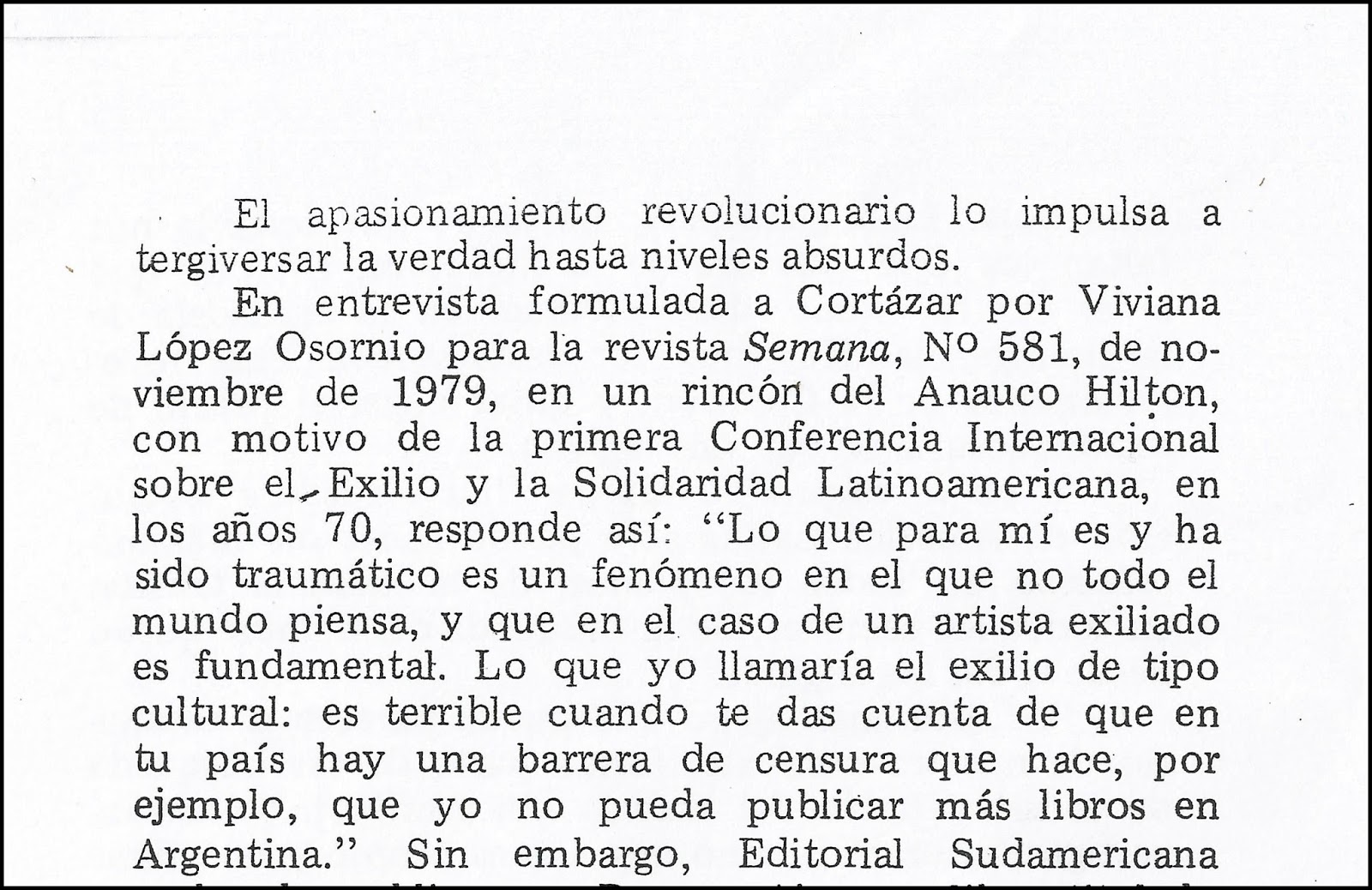
"Mi dolor de exilio es tan grande que cubre todo mi cuerpo.

Muevo un dedo del pie y sufro".

Lejos de casa


EDICIONES CHORONÍ celebra un año de vida y de éxitos


 En un año hemos publicado 18 libros en español, inglés y bilingues:  humor, teatro, novela, poesía, artes plásticas, entrevistas, autoayuda, cuentos, infantil.

GRACIAS a nuestras lectoras y lectores que nos permiten seguir creciendo.

GRACIAS  a las autoras y autores que confiaron en Ediciones Choroní (ex Escritoras Unidas & Cía. Editoras): Joan Baez, José Pulido, Beatriz Iriart, Claudia Patricia López Osornio, Jairo Carthy, Armando Africano, Carmen Carmona, Viviana Marcela Iriart.

Y GRACIAS  a todas las personas que nos ayudaron, y ayudan, de diferentes maneras para que Ediciones Choroní, una pequeña editorial, siga adelante y con éxito.

EDICIONES CHORONÍ

Viviana Marcela Iriart: Fundadora/Directora

Jairo Carthy: Director Creativo

Joanna Costa: Prensa

edchoroni@gmail.com /edicioneschoroni@gmail.com

Nuestros libros se venden en Amazon,  pero también tenemos libros de lectura gratuita.

DETALLES METAFÍSICOS poemario del gran poeta venezolano JOSÉ PULIDO, galardonado en 2024 Italia con el Premio Internacional de Excelencia “Ciudad del Galateo - Antonio De Ferrariis” por su trayectoria poética, de EDICIONES CHORONÍ, de venta en Amazon


Ya está a la venta en Amazon el nuevo poemario del gran poeta venezolano JOSÉ PULIDO, quien en 2024 fue galardonado en Italia con el Premio Internacional de Excelencia “Ciudad del Galateo - Antonio De Ferrariis” por su trayectoria poética: DETALLES METAFÍSICOS.


El libro tiene prólogo de Rodolfo Izaguirre, fotografía de portada de Carlos Ayesta, diseño gráfico de Jairo Carthy, fotos de Pulido de Gabriela Pulido Simne, editado por Ediciones Choroní para despedir un año lleno de grandes libros, exito y satisfacciones. A la venta en Amazon en versión papel y digital para el mundo entero. No dejes de leerlo.


De venta en AMAZON


'Joan Baez received death threats, and was banned, persecuted' : Julio Emilio Moliné, co-director of the documentary 'Joan Baez in Latin America: There but for fortune (1981)' / book INTERVIEWS by Viviana Marcela Iriart (2025)


Joan Baez , May 1981 ©Julio Emilio Moliné

After that historical tour in which Joan Baez terrified dictators from Argentina, Chile and Brazil so much that they threatened to kill her and banned her from singing, among other things, the mythical singer-songwriter and pacifist will perform in March in the same countries in which her voice made perpetrators of genocide falter in 1981.


Thank you Joan Baez, for the brave and affectionate 1981 tour to bring comfort, joy and hope to the victims of the Pinochet, Videla, and Joao Baptista de Oliveira Figueiredo dictatorships.

Thank you Joan Baez, because despite receiving death threats and being banned and persecuted, she stayed at our side, sang to us, and showed the world the horror of dictatorships in the wonderful documentary 'Joan Baez in Latin America: There but for Fortune.'

Thank you Joan Baez  for giving victims a face and a voice, and restoring their humanity.

Thank you Joan Baez for condemning the crimes committed by both right-wing and left-wing dictatorships, as well as democracies.

Thank you  Joan Baez for defending human rights, for opposing wars, arms build-up, discriminationtotalitarianism.

Thank you  Joan Baez for showing me, when I was 16 years old, the meaning of non-violence and its difference with passivity.

Thank you Joan Baez because your fight is not limited to singing and talking to the press, as the documentary and this interview (among many other facts) demonstrate.

Thank you Joan Baez for your voice, which soothes all pain.

Thank you  Joan Baez for showing the way and being a banner but also doubt.

And thank you Julio Emilio Moliné for sharing some of your memories and photos from that brave tour of Joan Baez in Latin America… here, fortunately.


How did you become part of the tour of philanthropic activities and concerts Joan Baez did in 1981 across Latin America to show her support for the victims of dictatorships there?
One Monday morning at the end of April 1981 I got a call at work (I had a job at a TV station) from my friend John Chapman, an independent filmmaker from San Francisco.  He told me: 'Hey, would you like to go on a Latin American tour with Joan Baez for a month?  We can film it and make a documentary.'

Given that I speak Spanish, and I had lived in Chile for many years and had traveled around Argentina, John thought I would be a good partner for this adventure.  Being a little older than me, he had worked in Apocalypse Now with Francis Coppola and had fallen in love with cinema during that experience.  I said yes without hesitation, though I had no holidays and I needed to get an unpaid leave at work.

Another setback was that my wife was pregnant, and our daughter was expected to be born during the tour, so I had to ask her whether she thought this was a good idea.  She generously said yes.  And our daughter Andrea was born while we were in Buenos Aires interviewing a journalist from the New York Times.

That Monday when I received John's call, we met Joan in the evening at a Chinese restaurant  in Palo Alto.   Joan gave me the go-ahead, and we started the required paperwork.


What was you impression of Joan Baez?
I remember being a little shocked at the fact that I was eating Chinese rice with such a famous person.  Besides being a very attractive woman, she was very friendly and warm.  She asked us a lot of questions about Latin America, some very well-informed and others less so, and she paid for the meal.
She made a very good impression on me, because of her kindness and good sense of humor.


On what day did the tour begin?
On May 3, 1981, John and I met with Joan and Jeannie in México City, where we interviewed the Argentinian doctor (the dictatorship had caused great suffering to her family), and that evening Joan gave a concert where we had the chance to try the equipment.

The next day we set off to Argentina, where we stayed until May 15, when we crossed the Andes in our way to Chile.  There we stayed in Santiago until May 19, when we set off to Brazil.   We spent a few days in São Paulo and Rio, and then headed off to Nicaragua.  After that, Joan and Jeannie went alone to Venezuela.

That tour was recorded—except for the trip to Venezuela and Nicaragua—in the wonderful documentary 'Joan Baez in Latin America: There but for fortune.'  Who had the idea of making it? What was the purpose? How was it funded?
The main driving force of the documentary was John Chapman, who convinced Joan of the historical value of recording her tour.   Much of the funding came from Diamonds & Rust, Joan's company in California.  My salary was paid by KTEH TV, the TV station I worked for in San Jose.  When I asked for an unpaid leave to travel around Latin America with Joan and film, Peter Baker, my executive producer, convinced Maynard Orme, the station manager, that this was an idea they needed to support.  It was an act of courage that is rarely seen nowadays, because I had been working there for less than a year (and was only 27 years old).  KTEH also lent the filmmaking equipment, and paid the post-production and editing costs. 

Tragically, John died in an accident in 1983, less than a year after finishing the documentary. 

Do you think Joan Baez imagined she would receive death threats, bombs, tear gas and censorship of her concerts in the three countries?
No. She thought it would be difficult but never to such an extreme.  The person who sparked the idea of making the tour in Joan was the Chilean writer Fernando Alegría, who was a Literature professor in Stanford.    He believed things were waning a bit in the Southern Cone, and that Joan's visit would inject a lot of energy into Latin American people, especially those who were protesting against dictatorships.


(...) 

Excerpt from the book INTERVIEWS by Viviana Marcela Iriart.


NTERVIEWS, with graphic design by Jairo Carthy, 
is available on  AMAZON in paperback and ebook versions.


A DOOR OPEN TO THE SEA, play by Viviana Marcela Iriart: excerpt


The stage is barely lit. “Porque vas a venir” (Because you’re coming), a song by Carmen Guzmán and Mandy, sung by Susana Rinaldi, is played until the characters speak. 

Dunia enters from the right side. She is excited and nervous. She sits down, stands up, walks from side to side. She is thrilled. She can barely hold her laughter. 

Sandra appears on the left side. She is nervous and excited, but she moves slowly, in a controlled way. She stops at the large window, which is softly lit with a warm glow. She looks inside but sees no one: Dunia has left the stage at that point. She moves towards the proscenium. Dunia enters and does not see her. She goes to the proscenium. 

Until indicated, Sandra and Dunia behave as if they were in a dream. They never touch or look at each other. When they speak, it seems like they are talking to themselves. 


SUSANA RINALDI

“Because you’re coming my old house

unveils new flowers throughout the railing.

Because you're arriving, after so long,

I cannot tell if I'm crying or laughing.


I know you're coming, though you didn't say it,

but you'll arrive one morning.

There's a song in my voice, I'm not so sad,

and a ray of sunlight is coming through my window.


Because you're arriving, after a long journey,

there's a different hue, a different landscape.

Everything shines a different light and has changed its way,

because you're arriving after all.


Because you’re coming, from so far away,

I've looked at myself in the mirror once again.

And how will they see me, I asked myself,

the eyes of this day I was waiting for.


Because you're arriving I wait for you,

because you love me and I love you.

Because you're arriving I wait for you,

because you want it

and I want it too.”


SANDRA (As if she were alone, without noticing Dunia)
And then I thought, will she have changed much? Have I changed so much?

DUNIA (With the same attitude as Sandra)
I was waiting impatiently. I looked at myself in the mirrors and wondered what look you’d give to these wrinkles that have surrounded my eyes without yours. Would you recognize me with these gray hairs I didn't tell you about?

SANDRA
The street in front of your house seemed to be the same. The orange tree in the corner where the greengrocer's was, the paving stones at Don Giuseppe’s store - still broken -, the magnolia tree that would never bloom. But above all, the smell of the orange tree announcing your house was nearby. It all looked the same.

DUNIA

Your voice on the phone, cheerful and teasing, here and not there once again, the same old voice, and I swear I could have eaten up the receiver to eat your voice so that you’d never be gone again.

SANDRA (She turns her back on her)

I admit it - I was scared. The doorbell was there, tiny and glossy. It looks like a nipple, I thought, a nipple inviting the erotic—but no, this little nipple-doorbell was inviting me to the past and I was saying: should I touch it, should I not? I would stretch a finger and stroke it slowly, without pressing, in case I could excite it and make it ring. My finger was bringing you back to my memory.


DUNIA (She turns her back on her)
I looked at you through the peephole, which of us did I see? Years flashed by in the glass eye and did not let me see you.

SANDRA (She comes forward slowly with her back to Dunia)
My finger was still on the doorbell. A door was coughing weakly and I listened to it. The little moaning nipple would not need to be touched. I crossed the doorstep and rested my chest, my whole body, on the door.

DUNIA (She comes forward slowly with her back to Sandra)
I saw you and I pressed my body on the exact same place as you had placed yours. A door divided us and bound us. I was drowning and I thought: there’s no shore near here or any lifeguard in this place.

SANDRA
Your breathing in my ear was suffocating me, it didn't let me think. I was going crazy, I was fainting.

DUNIA
The air from your mouth made me warm, and I was getting filled with sweet old memories. The air from your mouth was burning me, immolating me.

SANDRA (Stands very close to Dunia’s back, without touching it)
Your fingers scratching the wood, scratching and moaning like a stray cat about to give birth to dead memories.

DUNIA
I felt you were sliding down the door to the floor and I reached out to stop you from hitting it.

SANDRA
Your back was sticking into mine, piercing me. I felt pain, I felt pleasure.

DUNIA

You were crying—and you never cried—in a way that was new to me.


SANDRA
You were crying and in your tears was the same old pain I always remembered.

DUNIA
I heard you say: you’re back at last.

SANDRA
And I heard you answer: at last I’ve returned.

(...)

A DOOR OPEN TO THE SEA by Viviana Marcela Iriart


Dr. Susana D. Castillo, University of San Diego, United States:

“…...the play explores the uprooting of its two characters on different levels. On one level, the play deals with the anxious reunion of two women separated for ten years…

Aptly, the initial encounter is choreographed as a slow dance in which the two women try to find each other—as if in a mist—while simultaneously suppressing the outward expression of their conflicting emotions… Thus, they will move—with caution and restraint—from reminiscence to laughter, from song to nostalgia, from distance…to the tango!...

(...) It is worth adding that Viviana Marcela Iriart—novelist and journalist—sought refuge in the Venezuelan Embassy at the age of 21, a period that marked the beginning of her exile, which would take her to various parts of the world before she settled in Venezuela…”


Available for sale on Amazon


Viviana Marcela Iriart (1958) is an Argentine-Venezuelan writer, playwright, and interviewer.


She has published 
"La Casa Lila" ( novel), "Interviews" (interviews with cultural figures, in English), and "¡Bravo, Carlos Giménez!" (biography). She compiled the free-to-read book "María Teresa Castillo-Carlos Giménez-Festival Internacional de Teatro de Caracas 1973-1992", a collaborative work with José Pulido, Rolando Peña, Karla Gómez, Carmen Carmona, and Roland Streuli.


"A DOOR OPEN TO THE SEA", as well as her forthcoming novel "Lejos de Casa", is based on her experiences with the Argentine dictatorsh


A DOOR OPEN TO THE SEA, play by Viviana Marcela Iriart, available for sale on Amazon


Play. Argentina, early 1990s. Sandra and Dunia, childhood friends who were detained and disappeared by the dictatorship in a concentration camp for being pacifists, reunite after Sandra's years in exile.

The emotional reunion gives way to the shocking realization of how the dictatorship managed to separate them and create two communities: one for those who stayed and one for those condemned to exile.

Suddenly, an abyss opens before their eyes, leaving them on opposite shores.

Can they build a bridge to unite them?


Dr. Susana D. Castillo, University of San Diego, United States:

“…...the play explores the uprooting of its two characters on different levels. On one level, the play deals with the anxious reunion of two women separated for ten years…

Aptly, the initial encounter is choreographed as a slow dance in which the two women try to find each other—as if in a mist—while simultaneously suppressing the outward expression of their conflicting emotions… Thus, they will move—with caution and restraint—from reminiscence to laughter, from song to nostalgia, from distance…to the tango!...

(...) It is worth adding that Viviana Marcela Iriart—novelist and journalist—sought refuge in the Venezuelan Embassy at the age of 21, a period that marked the beginning of her exile, which would take her to various parts of the world before she settled in Venezuela…”


Available for sale on Amazon


Viviana Marcela Iriart (1958) is an Argentine-Venezuelan writer, playwright, and interviewer.


She has published 
"La Casa Lila" ( novel), "Interviews" (interviews with cultural figures, in English), and "¡Bravo, Carlos Giménez!" (biography). She compiled the free-to-read book "María Teresa Castillo-Carlos Giménez-Festival Internacional de Teatro de Caracas 1973-1992", a collaborative work with José Pulido, Rolando Peña, Karla Gómez, Carmen Carmona, and Roland Streuli.


"A DOOR OPEN TO THE SEA", as well as her forthcoming novel "Lejos de Casa", is based on her experiences with the Argentine dictatorship and exile.


LA CASA LILA, novela lgtb de Viviana Marcela Iriart, diseño gráfico de Jairo Carthy, de venta en Amazon


Un amor distinto… aunque no todos lo entiendan


Verano de los '80. Paola, corresponsal de guerra, viaja a una Argentina atravesada por las heridas de la última dictadura a visitar a su abuela, mecenas de Puerto de Caracoles, un encantador pueblito a orillas del mar fundado por sobrevivientes de las guerras europeas. Allí se reencontrará con su amigo Fabián, actor, quien la invitará a una fiesta en una casa muy especial: la casa lila, habitada por la ceramista Luz y su marido Gabriel, arquitecto. Esa noche, sin que nadie lo imaginara, surgirá un amor que atravesará todos los tabúes y prejuicios.


"Esta historia que voy a contarles sucedió hace mucho.
En una época en que hombres y mujeres se desvivían, desolaban, revivían y morían, simbólicamente, por pasiones tan primitivas y lejanas como el amor.
Una época en que el amor se hacía cuerpo a cuerpo, sudor contra sudor, gemido sobre gemido.

Después llegó Internet.

Y la paz a los corazones.

Y el aburrimiento.

Será por eso que mis jóvenes amigas disfrutan tanto con esta historia y me piden una y otra vez que se las cuente". (fragmento)


LA CASA LILA, de Viviana Marcela Iriart, con diseño de Jairo Carthy, publicada por Ediciones CHORONÍ, está a la venta en Amazon: https://www.amazon.com/dp/B0FP2P1SB7


Viviana Marcela Iriart es una escritora y editora argentina-venezolana. 


Ha publicado los libros ¡Bravo Carlos Giménez!,  recopilando a través de entrevistas el legado del genial creador teatral, fundador del Festival Internacional de Teatro de Caracas y el libro Entrevistas: Julio Cortázar, Nava Semel, Rolando Peña, José Pulido, Susy Dembo, Mariana Rondón, Elisa Lerner, Carlos Giménez, Esther Dita Kohn de Cohén, Beatriz Iriart, Dinapiera Di Donato, Sonia Zilzer, Julio Emilio Moliné, Roland Streuli, Luisa Richter, María Lamadrid. 


Ambos libros fueron publicados por  la ex Escritoras Unidas & Cía. Editoras, fundada por la escritora, que cambió su nombre recientemente a Ediciones CHORONÍ al asociarse con el artista y diseñador gráfico Jairo Carthy.   


Ediciones CHORONÍ publica libros para la venta en Amazon y libros de lectura gratuita, entre estos últimos  Bajo el Bombardeo Hanoi 1972,  de la cantautora y pacifista Joan Baez, un potente alegato en contra de las guerras publicado con la autorización de su autora. 


Related Posts Plugin for WordPress, Blogger...